

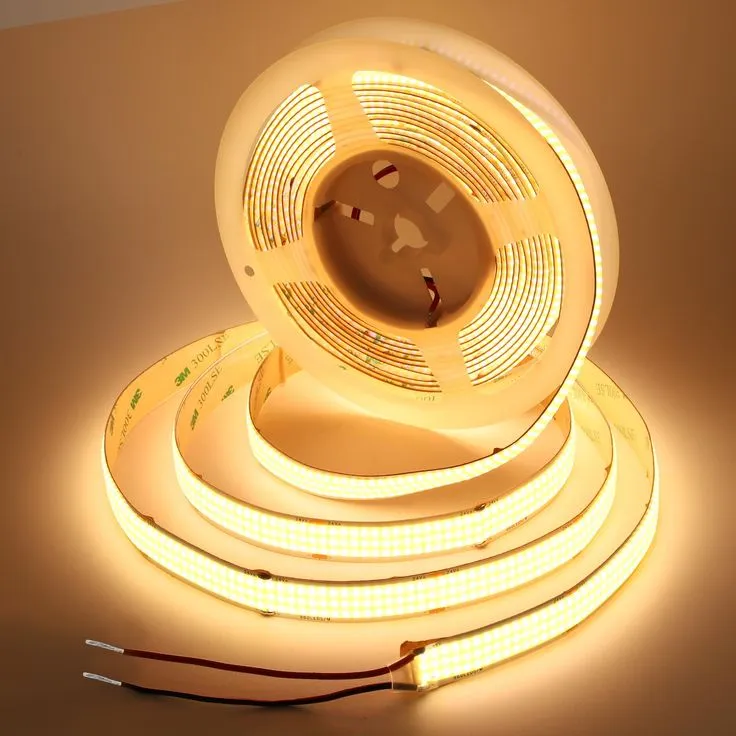
Long runs are not as easy as they sound, and these do require a bit more planning if they are to be large lighting units. With long ceilings, walls, corridors, display areas, or commercial interiors, the performance of an LED strip is particularly crucial. The brightness should be even throughout the installation, and power distribution and heat management should be taken into consideration. When installing longer distances, it can be more practical to use a longer strip, which can help to achieve a cleaner finish.
Understand Long-Run Requirements
While a long lighting run wouldn’t be so challenging for a standard fluorescent system, it would be for an LED system. Typically, power needs to be plugged in at multiple points on the conventional installation to ensure even output. Longer systems may have voltage drop, resulting in the LEDs towards the power connection being brighter than the others.
For longer continuous sections, LONGRUN 24V LED STRIPS are created for applications. The 24V operating level provides longer runs compared to many similar low voltage products, but the maximum run length will vary with the particular product and installation.
Do not assume that all 24V strips can run for the same length, as it varies according to the manufacturer’s recommended maximum run distance.
Look at Power Distribution
One of the most crucial aspects of a lengthy LED installation is power planning. Total wattage will be determined by the strip’s power consumption per meter and the total length of strip to be installed.
The overall electrical requirement of the project must be determined prior to selecting the power supply; for instance, several meters of lights will have a total electrical requirement before a power supply can be chosen. The power supply should be able to deliver the required voltage for the strip and be rated for the required amount of power.
For large installations, power injection or multiple feed points might be necessary. These should be designed to fit within the strip layout and not added on to the completed strip. Well-placed lighting can help to achieve more even lighting throughout the project.
Consider COB Technology
The color of the strip is another factor to take into account, especially if the strip is going to be showing through shallow profiles or architectural elements. In some cases, traditional LED strips have been known to exhibit individual “point of lights” when viewed directly or in a narrow diffuser.
The LED arrangement in a COB LONGRUN LED STRIP creates a denser LED surface, resulting in a more continuous and more “lines” appearance. It can come in handy when the applications are not always expecting to see the single LED points and want a smooth visual effect.
COB technology can be well suited for coves, shelving, architectural details, furniture and other installations where the source of the light could be slightly visible.
Check Heat Management
If the LED installation is long and higher-output LEDs are used for long periods, they can produce significant heat. Heat management should thus be considered in the design phase.
Aluminum channels can offer an appropriate mounting surface, as well as redirect heat from the strip. It is important that the selected profile be sufficiently large to accommodate the strip as well as suitable for the output of the product.
Do not put high output LED strips in completely closed areas, unless the product is specially made for such use. The performance and service life of the lighting may be affected by installation conditions.
Match the Strip to the Application
The type of LED strip used in different long-run projects will be different. In one application, it might be important to achieve smooth illumination, and in another one to achieve high brightness and good color quality. Special protection is required, and an appropriate ingress protection rating is required for outdoor or damp locations.
Take into account color temperature, color rendering, dimming capabilities and whether the lighting will need to be controlled. The selections should be done prior to installation, as it can sometimes be necessary to rewire or provide access to the area in order to change components.
Plan the Installation Carefully
Once installed, measure the real path of the installation to determine the size of the light tool to be ordered. Take into account corners, gaps, connection points, profiles and areas where the strip might need to be cut.
It is also important to carefully plan the power supply location. Where possible, maintaining a reasonable clearance around electrical components may make future inspection or replacement easier. Documenting the routes of cables and connection points can save time when it comes to maintenance on commercial projects.
Long runs are also recommended to be tested prior to the final installation. Testing can reveal any brightness balance problems, faulty connections or control problems, and adjustments are relatively easy when the issues are discovered early.
Conclusion
A proper long run LED system is achieved by the integration of electrical planning, proper technology, effective heat management and careful installation. Not all the possible runs that can be made are the most useful. The most important thing is to get the required length while getting reliable and consistent lighting. Experts looking at long-term solutions can check out richeelighting.com for LED strip products and elements that could match bigger architectural or business lighting jobs.
